Winter can be a magical time of year with snow, cozy fires, and holiday celebrations. But for our pets, cold weather can bring serious challenges. Dogs, cats, and other furry friends are susceptible to cold temperatures, frostbite, and other winter hazards. As a responsible pet owner, it is important to know how to keep your pets safe, comfortable, and warm during the winter months. In this blog, we will share practical tips to ensure your pets enjoy winter just as much as you do.
1. Understand Your Pet’s Winter Needs
Different pets have different tolerance levels for cold weather. Small dogs, short-haired breeds, elderly pets, and sick animals are more vulnerable to the cold. Cats that spend time outdoors may also need extra care. Understanding your pet’s breed, age, and health is the first step in keeping them warm during winter.
2. Provide a Warm Indoor Space
Pets should always have access to a warm, dry indoor space during cold weather. Make sure their bedding is off cold floors and away from drafts. A cozy pet bed with soft blankets can make a huge difference. For cats and small dogs, consider heated pet beds, which provide gentle warmth and comfort.
Tip: Avoid placing pet beds near windows or doors where cold air can enter.
3. Use Pet Clothing for Extra Warmth
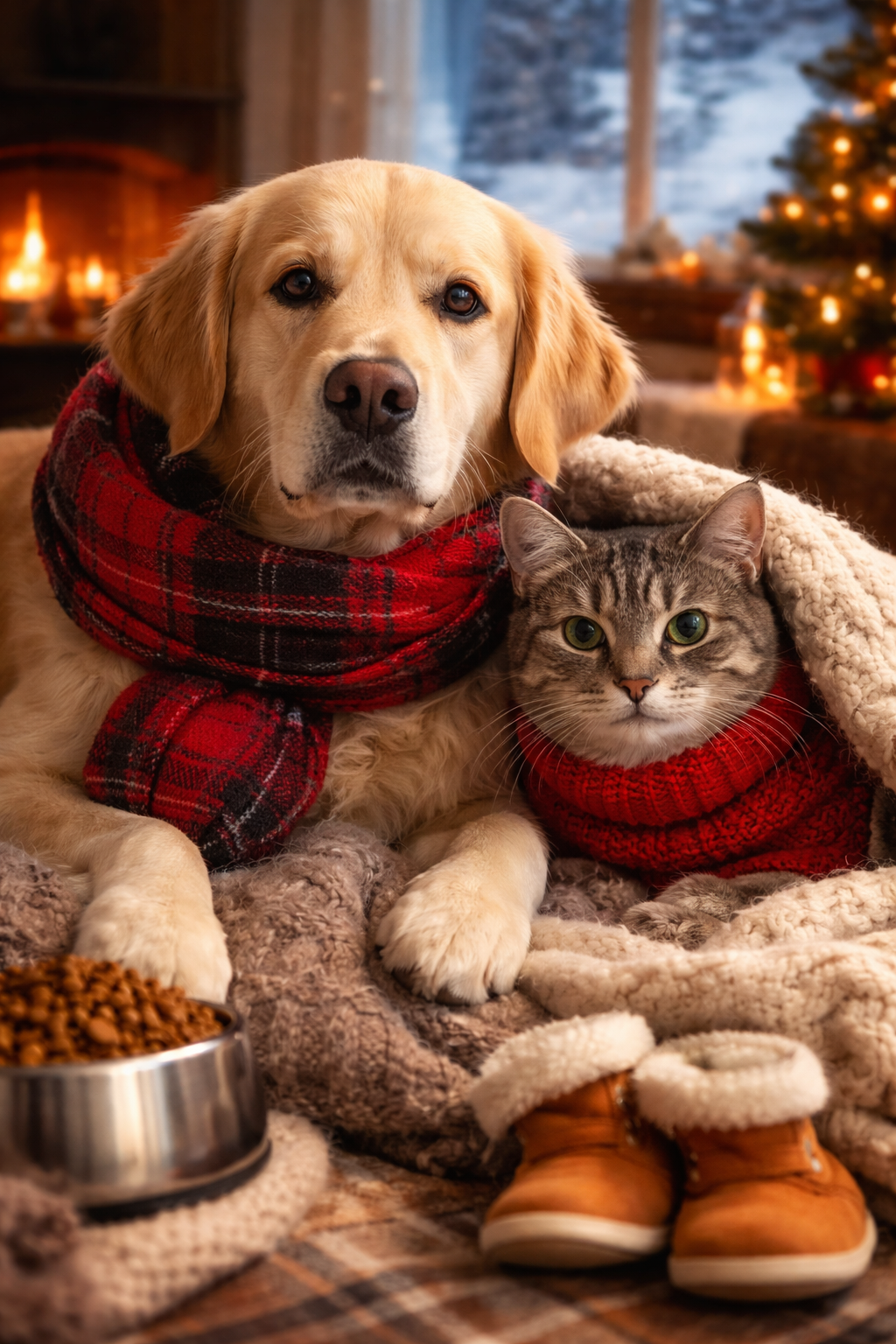
Some pets benefit from wearing clothing in winter. Dog sweaters, jackets, or even booties can help keep small and short-haired dogs warm. When choosing pet clothing:
- Ensure it fits properly and is comfortable.
- Avoid tight collars or garments that restrict movement.
- Remove clothing indoors to prevent overheating.
Even cats with short hair or senior cats may enjoy soft pet sweaters during chilly days.
4. Protect Their Paws
Paws are particularly sensitive to snow, ice, and salt. Cold surfaces, ice, and de-icing chemicals can irritate paw pads and even cause frostbite. Here’s how to protect your pet’s paws:
- Use pet booties to prevent direct contact with snow or ice.
- Apply pet-safe paw balm to keep pads soft and protected.
- Wipe paws after walks to remove ice, snow, or harmful chemicals.
Keeping nails trimmed and fur between paw pads short can also help prevent ice from sticking.
5. Adjust Their Diet
Pets may burn more calories in winter to maintain body heat. Talk to your veterinarian about whether your pet’s diet should be adjusted during colder months. Some tips:
- Increase portion size slightly if your pet is active outdoors.
- Ensure fresh water is always available, as pets can become dehydrated even in cold weather.
- Avoid leaving water outside for outdoor pets; ice can form quickly.
Proper nutrition helps pets maintain energy levels and body warmth.
6. Limit Outdoor Time
Even pets that love playing outside should have limited exposure during extreme cold. For short-haired or small dogs, a 10–15 minute walk may be sufficient in freezing weather. Cats should be kept indoors whenever possible.
Tip: Monitor pets for signs of discomfort, such as shivering, lifting paws off the ground, or whining.
7. Provide Shelter for Outdoor Pets
If your pets live outdoors or spend time outside, ensure they have safe and warm shelters. A winter-proof pet house should:
- Be elevated from the ground to prevent cold and moisture.
- Have insulated walls and a waterproof roof.
- Include bedding like straw or blankets that keep warmth in.
Check the shelter regularly for drafts or leaks. Outdoor pets also need access to fresh, unfrozen water.
8. Keep Them Active
Physical activity helps generate body heat. Even short play sessions indoors can help pets stay warm and active. For dogs, winter walks, indoor fetch, or tug-of-war are great ways to keep them moving. Cats enjoy interactive toys, climbing towers, and puzzle feeders to stay engaged.
9. Watch for Winter Health Issues
Cold weather can worsen certain health conditions like arthritis, heart problems, or respiratory issues. Keep an eye out for signs of discomfort, such as:
- Shivering or trembling
- Limping or difficulty walking
- Hiding or unusual lethargy
- Cold extremities
If you notice any concerning signs, consult a veterinarian immediately.
10. Fun Ways to Keep Pets Cozy
Winter can be enjoyable for pets too! Here are some ways to make it fun while keeping them warm:
- Provide heated mats or blankets.
- Create a cozy corner near a fireplace (but maintain a safe distance).
- Encourage snuggles and cuddle time.
- Rotate toys and puzzles indoors to prevent boredom.
Winter is a great time to bond with your pets while keeping them comfortable.